

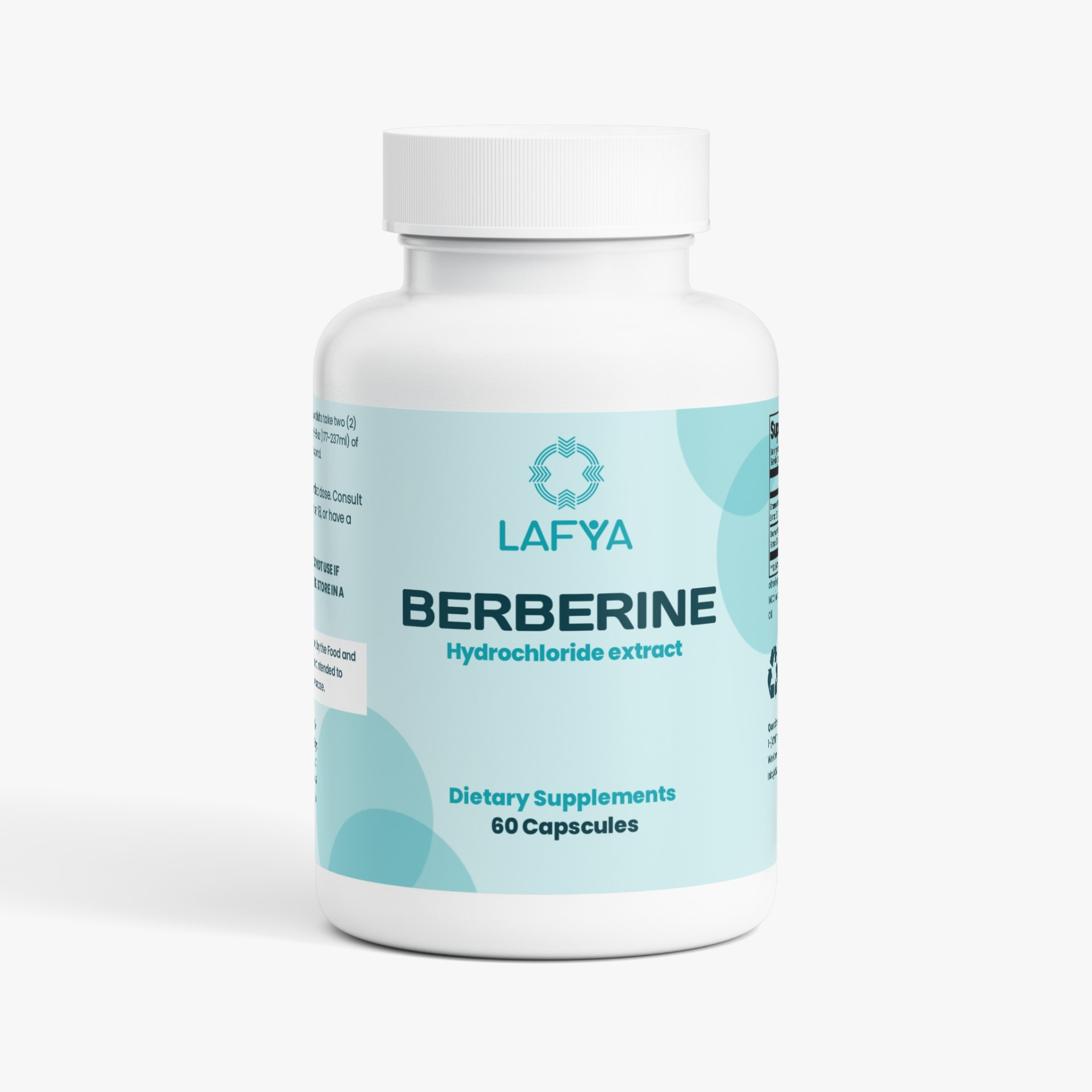
Complete product label
Noon
Berberine
Before you take this one
“In general, it is suggested to speak with your healthcare provider before taking any supplements.”
Price $20.71+ $5.29 shipping
Shipping is calculated at checkout. Ships within the contiguous US only.
Bundle pricing
Shipping shown separately- 1 item$20.71+ $5.29 shipping
- 2 items$41.81+ $6.19 shipping
- 3 items$67.81+ $6.19 shipping
- 4 items$82.51+ $7.49 shipping
- 5 items$100.00+ $0.00 shipping
Shipping is added at checkout. Bundle pricing applies automatically in your cart — you don't need a code.
Supplement Facts
Serving Size 2 Capsule
Servings Per Container 30
| Amount Per Serving | % Daily Value |
|---|---|
| Granular Berberine Hydrochloride Extract 8% (bark/root) 790 mg | ** |
| Granular Berberine Hydrochloride Extract 97% (bark) 10 mg | ** |
** Daily Value (DV) not established
Other ingredients: Cellulose (Vegetable capsule), MCC (microcrystalline cellulose), L - Leucine, Olive oil
Transcribed from the manufacturer's printed Supplement Facts panel image, retrieved 2026-10-23. Source panel
What's in it
Identity records and quotations below come from PubChem, a public database of the National Library of Medicine (NIH). Original contributors are named with each quotation; excerpts are identified. LAFYA does not interpret or add to the quoted text.
- Name (IUPAC)
- 16,17-dimethoxy-5,7-dioxa-13-azoniapentacyclo[11.8.0.02,10.04,8.015,20]henicosa-1(13),2,4(8),9,14,16,18,20-octaene
- Molecular formula
- C20H18NO4+
- Also known as
- Berberine, Berberin, Umbellatine, Berbericine, Majarine
Chemical classification (excerpt)
“Berberine is a quaternary ammonium salt of an isoquinoline alkaloid and active component of various Chinese herbs”
NCI Thesaurus, via PubChem — Record DescriptionBotanical sources (excerpt)
“found in many botanical products, including goldenseal, barberry and Oregon grape”
NIH LiverTox, via PubChem — LiverTox SummaryLiver documentation
“Berberine has not been linked to serum enzyme elevations during therapy, although there have been few prospective studies in humans that have reported on its effects on laboratory test results in any detail. In published trials, berberine has appeared to be well tolerated with only minor and few adverse effects which have been similar in frequency among persons receiving placebo. Despite wide scale use as an herbal supplement, berberine has not been linked to published instances of clinically apparent liver injury. The frequency of hypersensitivity reactions to berberine is also not known.”
NIH LiverTox, via PubChem — HepatotoxicityPregnancy (excerpt)
“It is not known if berberine can increase the chance of miscarriage. One study suggests that berberine might cause uterine contractions.”
MotherToBaby, via PubChem — Pregnancy and LactationBreastfeeding
“Berberine can pass into breastmilk, but it is not known how much. It may raise the risk of bilirubin buildup in a baby’s brain, which can lead to brain damage and other problems, especially in newborns. Also, because berberine is a supplement, it is not recommended for use during breastfeeding unless your healthcare provider has prescribed it to treat a medical condition. Be sure to talk to your healthcare provider about all your breastfeeding questions.”
MotherToBaby, via PubChem — Pregnancy and Lactation